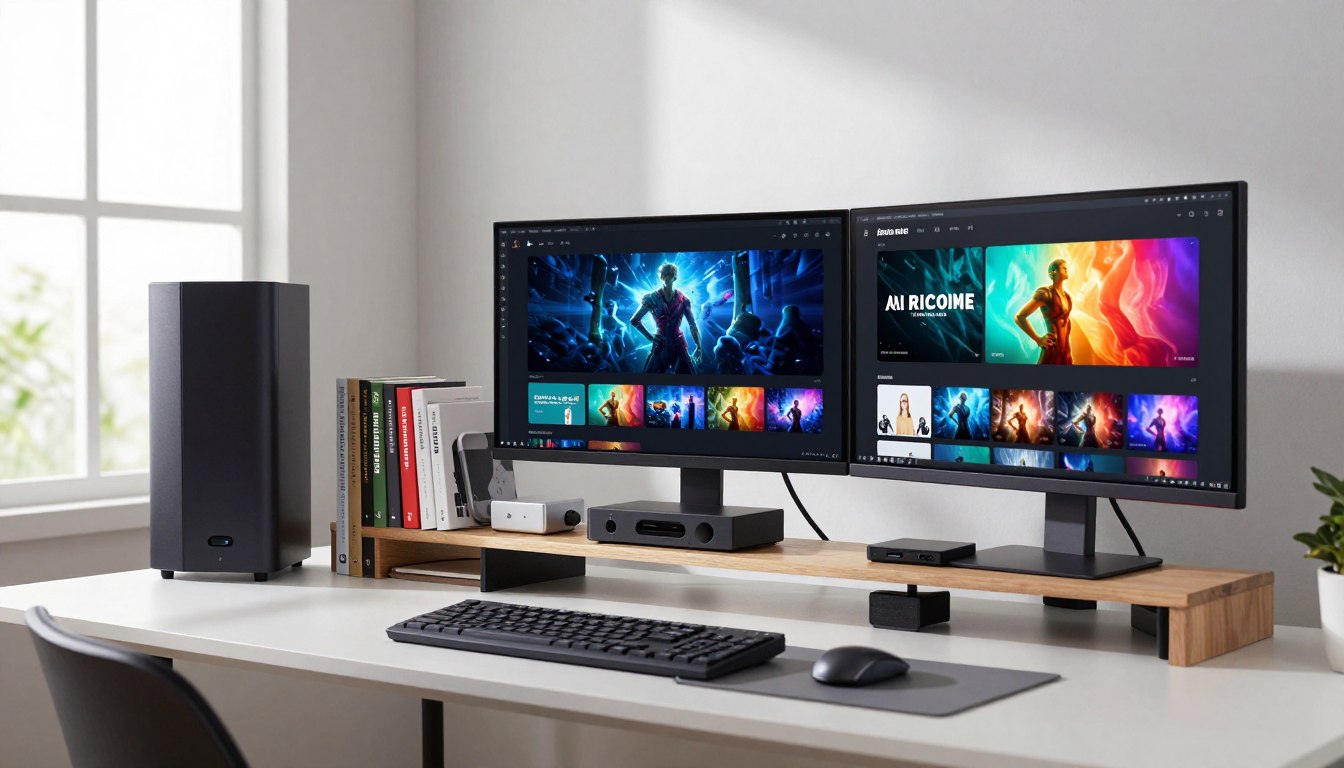
What if you could build a personal entertainment system that respects your privacy and puts you in full control? Imagine having a vast library of digital material, managed entirely on your own terms without monthly fees or data leaks.
This guide introduces a powerful alternative to cloud-based platforms. You will learn to run a complete media system locally on your machine. The approach uses free, open-source tools found on a popular code hosting platform.
The benefits are significant. You gain complete privacy for your personal collection. You also get total control over how your material is organized and accessed. Best of all, you avoid recurring subscription costs.
You don’t need to be a tech expert. We will walk you through the process with clear, step-by-step instructions. The setup involves three main parts: a media manager, an artificial intelligence toolkit, and smart tagging models.
This method responds to a growing trend. More people are creating and collecting digital content. A robust personal management solution has become essential.
By the end, you will have a fully functional and intelligent video library. It will be private, organized, and tailored just for you.
Key Takeaways
- Run your media library locally for enhanced privacy and security.
- Maintain full control over your personal content and data.
- Utilize free, open-source projects from a code repository.
- The system combines a media manager, AI tools, and tagging models.
- No prior technical expertise is required to follow the setup.
- Eliminate ongoing subscription fees for platform access.
- Create a professional-grade, intelligent organization system.
Introduction: What Does “Host on Computer” Really Mean?
Local hosting transforms your personal computer into a dedicated media hub, cutting out the middleman entirely. It means the software that manages and serves your files runs directly on your machine. Your collection stays on your hard drive, not on a company’s distant server.
This approach is fundamentally different from using a streaming service. You are not just a subscriber. You become the administrator.
Think of it like the difference between a public cinema and your own home theater. In the cinema, you watch what’s playing, when it’s playing. With a home theater, you decide the schedule, the library, and who gets an invite.
Beyond Cloud Storage: The Power of Local Hosting
Choosing to run your system locally comes with clear, powerful benefits. The first is complete data ownership. Your files are your property, physically stored on hardware you control.
There is no dependency on an internet connection for access. Your library is available anytime, even during a network outage. This also means no buffering from slow remote servers.
Privacy is significantly enhanced. Sensitive material never travels over the internet or sits on a third-party server. It remains within the walls of your home network.
“Self-hosting is the ultimate form of digital self-reliance. It returns control of the data to the individual, where it belongs.”
Many people assume setting this up requires deep technical skill. This is a common misconception. Modern tools have made the process much more manageable.
The financial aspect is also appealing. After the initial setup, there are typically no ongoing subscription or cloud storage fees. This can lead to substantial savings over time.
Why GitHub is Your Starting Point, Not Your Host
It’s crucial to understand what role a platform like GitHub plays. GitHub is a code repository. It is where developers share the source code for applications.
You use GitHub to download the software blueprints. You do not host your media files there. Think of it as a digital toolbox or a library of instruction manuals.
You visit the site, find the project you need, and download it to your machine. From that point on, GitHub’s job is done. Your computer does all the work.
To make the distinction crystal clear, let’s compare the two concepts side-by-side.
| Aspect | Local Hosting (On Your Computer) | Cloud/Streaming Service |
|---|---|---|
| Data Location | Files reside on your internal drive or NAS. | Files are stored on a provider’s remote servers. |
| Access Control | You have full administrative control and set permissions. | Governed by the provider’s terms of service and infrastructure. |
| Internet Required | No. Access is direct over your local network. | Yes. A constant connection is needed for streaming. |
| Recurring Cost | Typically none after setup (excluding electricity). | Monthly or annual subscription fees are standard. |
| Privacy Level | Very high. Data never leaves your premises. | Variable. Subject to provider’s data policies and potential leaks. |
The system we are building relies on three key projects from GitHub. These will form the backbone of your setup.
- A powerful media manager application to organize and play your library.
- A self-contained toolkit for running automation and intelligence tasks.
- A specialized model for automatically identifying and tagging content.
Getting these tools is a straightforward process of visiting their pages and following download instructions. If you need to check back on the instructions months from now, you can easily find them. The repositories are always there.
Sometimes, during setup, you might need to open another tab window for documentation. If a web interface acts up, a simple reload refresh session often fixes it. These small steps are part of the journey toward full ownership of your digital space.
Understanding the Toolkit: Three GitHub Projects You’ll Need
The foundation of your self-managed library rests on a trio of specialized open-source tools. Each serves a unique role in creating a seamless, intelligent system. You will download their blueprints from the code platform.
From there, you run everything locally on your machine. This approach gives you powerful capabilities without external dependencies. It’s like having a professional studio toolkit at your fingertips.
You might open another tab for documentation during setup. If a web interface glitches, a simple reload refresh session often resolves it. These are minor steps toward a major upgrade.
1. The Media Manager: Stash App
Stash is a powerful, open-source application designed to organize video collections. It acts as the central hub for your entire library. The software is web-based, so you access it through your browser.
It automatically gathers metadata from online sources. This includes titles, descriptions, and actor information. Support for many file formats ensures broad compatibility.
Tagging and search features are robust and user-friendly. You can extend functionality with community-built plugins. The project enjoys active development and strong community support.
You can see this by its number of GitHub stars and frequent releases. Many contributors help improve the code. The license is permissive, allowing for personal and local use.
2. The AI Brain: Self-Hosted AI Starter Kit
This toolkit is a pre-packaged Docker environment. It provides the intelligence layer for your system. Think of it as the automation command center.
It includes n8n, a low-code platform for building workflows. Ollama runs local large language models without an internet connection. Qdrant stores vector data for advanced searches.
PostgreSQL handles traditional database needs. The entire stack is defined in a Docker Compose file. This makes installation and updates very straightforward.
The repository is well-maintained with clear documentation. You can check the action history to see recent changes. It’s a turnkey solution for adding smart features.
3. The Specialized Tagger: NSFW AI Models
This project offers state-of-the-art machine learning models. They are trained specifically for tagging adult content with high accuracy. The system can identify scenes and provide time-based labels.
Two main model tiers are available. The free version recognizes a solid set of 10 common tags. Patreon-supported models expand this to an impressive 151 tags for granular categorization.
The license is for personal, local use only. You download the model files and run them on your hardware. This ensures your data never leaves your possession.
Accuracy is a key focus, with continuous improvements. The models are part of a dedicated open-source project. They receive updates through new releases and packages.
Together, these three components create a synergistic system. Stash manages the library’s presentation and organization. The AI Starter Kit supplies automation and analytical power.
The specialized tagger enriches your content with deep, accurate metadata. This combination rivals expensive commercial software. Yet, it costs little to nothing and puts you in full control.
“Open-source projects thrive on community collaboration. The shared goal is to build tools that empower individuals, not corporations.”
When comparing these tools to paid alternatives, the advantages are clear. You avoid subscription fees and data mining. You also gain the ability to customize and tweak every aspect.
If you ever get stuck, remember help is available. The communities around these projects are active and welcoming. A quick search in their forums or Discord often yields a solution.
| Project Name | Primary Function | Key Components | License Type |
|---|---|---|---|
| Stash App | Media Library Management | Web Interface, Metadata Scrapers, Plugin System | Open Source (MIT) |
| Self-Hosted AI Starter Kit | Automation & Intelligence | n8n, Ollama, Qdrant, PostgreSQL | Open Source (Docker Compose Template) |
| NSFW AI Tagger | Content Tagging & Analysis | Machine Learning Models (Free & Patreon) | Personal Use Only |
Getting started involves visiting each repository page. You download the necessary files or clone the code. Sometimes, you may have signed another account to access certain resources.
Keep a tab window open for the official guides. Follow the installation steps carefully. Before you know it, your powerful private system will be ready.
Prerequisites: What You Need Before You Start
To build a robust private library, you need to meet a few foundational requirements first. Think of this as gathering your tools and checking your workspace. A little preparation now ensures a smooth and frustration-free installation process later.
We will cover everything from your machine’s hardware to the essential software packages. You’ll also set up the digital space where your collection will live. Let’s get your system ready for action.
Hardware Requirements: GPU vs. CPU
Your system’s power directly impacts performance, especially for automated tagging tasks. The choice between using a GPU or a CPU is a major factor.
An NVIDIA graphics card (GTX 1080 or newer) is ideal. It provides full support and processes tasks rapidly. This is the recommended path for speed.
AMD and Intel GPUs, along with MacOS systems, are currently in Beta. They work but may have occasional quirks. You can also run everything using just your computer’s processor.
A CPU-only setup is fully supported, but it is much slower. This is a practical option if you’re not in a hurry. Consider your patience versus your budget.
Keep your GPU drivers updated to the latest stable version. This avoids common compatibility error messages during setup. An outdated driver is a frequent cause of trouble.
| Component | Recommended (GPU) | Alternative (CPU) |
|---|---|---|
| Processing Type | NVIDIA GPU (GTX 1080+) | Modern Multi-core CPU |
| Performance | Fast, optimized for parallel tasks | Slower, uses general processing |
| Best For | Quick tagging and analysis | Basic library management |
| System RAM | 16GB or more suggested | 8GB minimum |
Essential Software: Docker, Git, and FFmpeg
Three key programs form the software backbone of your system. You’ll need to install these before proceeding with the guides.
- Docker Desktop: This tool creates isolated containers for applications. The self-hosted intelligence kit runs entirely within Docker. Download the correct version for your operating system.
- Git: This command-line tool is used to copy code repositories from the web platform to your local machine. It’s essential for fetching the latest project files.
- FFmpeg: The media manager requires this for handling video files. It processes thumbnails, previews, and file information seamlessly.
Operating system compatibility is broad. Use Windows 10 or newer, macOS 11+, or a modern Linux distribution.
On Windows and macOS, you might see security warnings when first running the media manager. The software is unsigned. You can safely bypass these prompts to proceed with the installation.
“Always download tools from their official sources. This guarantees you get a clean, unmodified version and proper support.”
Setting Up Your Media Library Directory
Organization starts on your hard drive. Create a dedicated folder for your media collection before you begin. This keeps everything tidy and easy for the software to find.
Ensure the drive has ample free space. High-definition content can consume storage quickly. Plan for future growth.
Follow these tips for a logical structure:
- Create a main folder (e.g., “Media_Library”).
- Inside, make subfolders by category, performer, or genre.
- Place your video files into these subfolders.
- Avoid deep nesting of folders; keep paths relatively simple.
This upfront organization saves hours later. The media manager scans these directories to build your catalog. A clear structure makes finding specific content effortless.
If you encounter an error during a scan, a common fix is to reload the page in the manager’s web interface. Sometimes, a simple “please reload page” message is just a temporary glitch.
Finally, check your system’s resources. Running several services at once uses RAM and CPU. Close other heavy applications during the initial setup for best results. Explore the manager’s settings and options to fine-tune performance later.
Step 1: Getting the Code from GitHub
The first practical step is to download the necessary tools from their online repositories. This process involves fetching three separate components to your local machine. You will gather the automation kit, the media manager, and the tagging models.
Think of it like shopping for ingredients before cooking a meal. You need everything in one place before you start assembling. A stable internet connection is recommended for downloading potentially large files.
Cloning the Self-Hosted AI Starter Kit Repository
This toolkit provides the automation brain for your system. You’ll obtain it using Git, a version control program. Open a terminal or command prompt on your machine.
Navigate to where you want to save the project. Then, run the clone command:
git clone https://github.com/n8n-io/self-hosted-ai-starter-kit.gitThis command copies the entire repository to a new folder on your drive. If you’re new to Git, you can use an alternative. Visit the project’s page and click the “Download ZIP” button.
Extract the ZIP files to your chosen location. The method you choose does not affect functionality. The important part is having the source code locally.
Downloading the Stash Application
Next, acquire the media manager. Visit the Stash project’s main page on the code platform. Look for the “Releases” section, usually on the right side.
This page lists all stable releases of the software. Find the latest version and download the correct executable for your operating system. Choose Windows, macOS, or Linux.
Save the downloaded file to a memorable spot. On Windows and macOS, you might see a security warning when you first run it. The software is unsigned for local use. You can safely proceed by bypassing the prompt.
Accessing the NSFW Tagger Models
The final component is the specialized tagging model. Navigate to its dedicated project repository. You will find two primary options for access.
The free model is available directly from the main page. It offers a solid set of tags to begin with. For the full model set with 151 tags, you need a Patreon membership.
This expanded model was released to supporters months ago. The free version is sufficient for starting out. Remember, the license is for personal, local use only.
Download the model files to your machine. Keep them in a secure location you can easily reference later.
Staying Organized and Prepared
Keeping your downloaded components organized is crucial. Create a dedicated project folder on your drive. Place all the downloaded files and extracted folders inside.
Note the exact paths where you save everything. You will need to point your software to these locations during configuration. Good organization now prevents confusion later.
If you encounter a web interface glitch during this process, a simple reload the page often fixes it. It can help to have the official guide open in another tab window for reference.
With all three components now on your machine, you’re ready for the next phase: installation and configuration.
Step 2: Installing and Running the AI Starter Kit with Docker
Now it’s time to bring the intelligence layer of your system to life by launching the automation toolkit. This step involves configuring a few files and running simple commands. The process sets up several interconnected services that will handle smart tasks for your library.
You’ll work primarily within a terminal or command prompt. Keep the project’s official guide open in another tab window for reference. If the web interface acts up, a quick reload refresh of the page usually fixes it.
Configuring Your Environment (.env) File
Before starting the services, you must set up your environment variables. These are settings like passwords and connection details. The kit includes a template file named .env.example.
Navigate to the folder where you cloned or extracted the starter kit. Copy the example file to create your own .env file. You can do this in your file manager or with a command:
cp .env.example .envOpen the new .env file in a basic text editor. You will see several variables to configure. The most important ones are the secret keys and passwords.
Set strong, unique values for items like N8N_ENCRYPTION_KEY and database passwords. You can leave optional settings as they are for now. Save the file when you’re done.
“Treat your
.envfile like a house key. Keep it secure and never share it publicly. It holds the credentials to your entire automation environment.”
Launching with Docker Compose: GPU vs. CPU Profiles
Docker Compose uses profiles to start different service configurations. Choosing the right profile for your hardware is crucial for performance. The command you run depends on your system’s graphics card.
Open a terminal in the kit’s main directory. Use one of the following commands based on your setup:
- NVIDIA GPU:
docker compose --profile gpu-nvidia up - AMD GPU:
docker compose --profile gpu-amd up - CPU only:
docker compose --profile cpu up
The terminal will show a lot of text as it downloads required images and starts containers. This may take several minutes the first time. Let the process complete.
| Profile | Hardware | Best For |
|---|---|---|
| gpu-nvidia | NVIDIA Graphics Card | Fastest processing for machine learning tasks. |
| gpu-amd | AMD Graphics Card | GPU acceleration (Beta support). |
| cpu | Any Modern Processor | Reliable operation without a dedicated GPU. |
Special Note for Mac Users: You need to run Ollama separately. First, install Ollama on your Mac from its official website. Then, in your .env file, set the OLLAMA_HOST variable to host.docker.internal:11434. This lets the Docker containers talk to the Ollama app on your computer.
Verifying Your Installation: Accessing n8n and Ollama
Once the terminal output settles and shows the services are running, verification is simple. Open a web browser on your machine. Go to the address http://localhost:5678.
You should see the n8n login interface. This is your workflow automation dashboard. The default login is often pre-configured; check the kit’s documentation for the first-time credentials.
Inside n8n, explore the pre-loaded example workflow. This confirms the core services are communicating correctly. You can create user accounts here for better security.
To check Ollama, open another tab in your browser. Visit http://localhost:11434. You should see a simple API response. Alternatively, run ollama list in a separate terminal.
If you encounter an error or a blank page, don’t panic. Common fixes include waiting a bit longer for services to fully start. You can also check the Docker container logs for more details.
Sometimes, you might get a “please reload page” message. A simple refresh session in your browser often resolves this. If you have persistent questions, the project’s community forums are a great place to report issues.
Remember the purpose of each service now running on your computer:
- n8n: The visual interface for building automation workflows.
- Ollama: Runs local language models for text generation and analysis.
- Qdrant: A vector database for storing and searching embedded data.
- PostgreSQL: A traditional relational database for structured information.
With these services active, your self-hosted intelligence hub is ready. You’ve successfully taken the second major action in building your private system. The next step will connect your media manager to this powerful backend.
Step 3: Installing and Configuring Stash Media Manager
Launching the media manager is your gateway to a visually organized and searchable library. This application serves as the central control panel for your entire collection. It transforms folders of files into a polished, browsable catalog.
You will run the software directly on your machine. The process involves a straightforward initial setup. Then, you access everything through a clean web interface.
Running Stash for the First Time
Locate the Stash executable file you downloaded earlier. Double-click to launch it. On Windows and macOS, you will likely see a security warning.
The software is unsigned. This is common for open-source applications meant for local use. You can safely bypass this prompt to proceed.
On Windows, click “More info” and then “Run anyway”. On a Mac, you may need to right-click the app and select “Open” from the context menu. This confirms you trust the software.
Once launched, the application runs in the background. A small icon may appear in your system tray. The main interaction happens in your web browser.
Initial Setup: Defining Your Library Paths
Open your browser and go to http://localhost:9999. The first-time setup wizard will greet you. Follow these steps carefully.
First, set a strong administrator password. This secures your management interface. Write it down in a safe place.
Next, specify the folder where your media files are stored. This is the most critical part of the setup. Pointing Stash to the correct directory is essential.
The software will scan and index every file found there. Choose the main library folder you created during the prerequisites step. Avoid selecting temporary or download folders.
Stash requires FFmpeg for video processing. If not detected, it will prompt you to download it. Allow the download; it’s a crucial component for generating previews and thumbnails.
Complete the wizard by saving your configuration. The system will then initiate its first library scan. You can explore the interface while this runs in the background.
“Correctly defining your library path upfront saves countless hours of reorganization later. It’s the foundation of an efficient catalog.”
Understanding the Stash Web Interface (localhost:9999)
After setup, your dashboard is the heart of the system. The main page shows recent scenes, performers, and statistics. Navigation is intuitive and clean.
The “Scenes” section lists all your indexed content. You can filter by tags, resolution, or date added. Powerful search functionality is available from any page.
The scan process extracts basic metadata from each file. This includes resolution, duration, and file format. More detailed information can be added later.
If you encounter an error loading a view, try a simple reload page action in your browser. This often resolves temporary display glitches.
Familiarize yourself with the Settings menu. Here you configure scrapers, manage users, and view system tasks. Exploring the options helps you tailor the experience.
The initial scan duration depends on your library’s size. A few hundred files may take minutes. Larger collections could require an hour or more.
Do not worry. The interface remains usable during this time. You can begin organizing and viewing content as soon as the first files are processed.
| Setup Phase | Primary Action | Key Outcome |
|---|---|---|
| Application Launch | Bypass OS security prompt and run executable. | Stash service starts running on your local machine. |
| Wizard Configuration | Set admin password and define media directory path. | Secured access and correct library location established. |
| FFmpeg Installation | Allow automatic download if prompted. | Essential video processing capabilities are enabled. |
| Initial Library Scan | System indexes files in your specified folder. | Catalog is built with basic file metadata. |
| Interface Exploration | Navigate Scenes, Search, and Settings menus. | User familiarity with management tools and options. |
Keep your browser pointed to localhost:9999. This is your new media headquarters. Check the version number in the settings to ensure you’re up to date.
For ongoing support, remember the community is active. If a feature seems missing, check the plugin library. Many enhancements are just a click away.
Your library is now taking shape. The next step involves populating it with your personal collection and connecting it to your network.
Step 4: How to Host AI Porn Videos on Your Computer with Your New System
This step transforms your setup from an empty framework into a fully functional, private entertainment hub. You will now populate your library with personal material and make it available across your home network. The concept of “hosting” becomes real as your machine serves the interface and streams content directly to your browser.
You have three main tasks: importing your collection, enabling network access, and maintaining an organized structure. Each action builds upon the stable foundation you’ve already created. Let’s turn your software into a personalized media center.
Importing and Scanning Your Video Collection into Stash
Adding your personal material to Stash is straightforward. You have two primary methods. First, you can place new files directly into the library folder you defined during initial setup.
Second, you can add entirely new folder paths via the Settings menu. Navigate to “Settings” > “Library” and click “Add Path”. After specifying a location, trigger a manual scan.
Stash then processes each file thoroughly. It generates preview images and video snippets. The system also creates perceptual hashes, which help detect duplicate files automatically.
All this metadata is stored in Stash’s internal database. This is a crucial feature. It means you can move or rename files through the Stash interface itself.
The database updates to reflect these changes, keeping your catalog perfectly synchronized. You avoid broken links or missing items. After scanning, your media is ready for browsing, curating, editing, and tagging.
“A well-scanned library is the backbone of effortless discovery. Let the software handle the tedious work of organization so you can focus on enjoyment.”
If you encounter a slow scan or an error loading a preview, a simple reload refresh session in your browser often helps. Keep the official guide open in another tab window for quick troubleshooting reference.
Connecting Stash to Your Local Network
Stash is web-based, which unlocks powerful access options. While you typically open it at localhost:9999 on your main machine, you can reach it from any device on your home Wi-Fi.
Find your machine’s local IP address. On Windows, use Command Prompt and type ipconfig. On Mac or Linux, use Terminal and type ifconfig or ip addr.
You will see an address like 192.168.1.100. On another device, like a phone or tablet, open a browser and enter http://[YOUR-IP]:9999. You’ll see the familiar Stash login screen.
This is hosting in action. Your personal machine acts as the server, streaming content on demand to other screens. No data ever leaves your local network unless you explicitly configure remote access.
| Access Method | Address | Best For | Privacy Level |
|---|---|---|---|
| Local Machine | http://localhost:9999 | Initial setup and management. | Highest (no network traffic). |
| Home Network | http://[YOUR-IP]:9999 | Viewing from tablets, phones, or other computers. | Very High (stays within your router). |
For consistent access, consider setting a static IP for your machine in your router settings. Alternatively, use a network name if your system supports it. This prevents the IP from changing and breaking your bookmarks.
All browsing and playback activity remains within your home. This is the ultimate privacy guarantee for your personal collection.
Organizing Files and Folder Structures
Good organization begins on your hard drive, even though Stash manages its own database. A logical folder structure makes manual file management easier and complements Stash’s smart features.
Adopt a consistent naming convention. Group files by genre, performer, or studio. For example, create main folders like “Genre_Actions” or “Performer_StageName”.
Avoid overly deep nesting of folders. Two or three levels is usually sufficient. This keeps paths simple for both you and the scanning software.
If you added material months ago under a different system, now is a perfect time to reorganize. You can move folders around using your file explorer. Then, use Stash’s “Scan” function to update its catalog.
Remember, Stash tracks files by their path and hash. If you move something through the interface, it updates the physical file location for you. This keeps everything in sync without manual effort.
Here are best practices to follow:
- Use descriptive folder names that you will recognize months from now.
- Keep your main library path broad and add subfolders for categorization.
- Let Stash generate thumbnails and previews; don’t create them manually.
- Periodically check for duplicate files using Stash’s built-in tools.
Your system is now alive with your personal collection and accessible across your private network. You have successfully transitioned from installer to curator and host. The next steps will show you how to enhance this library with intelligent automation.
Enhancing Your Library with AI-Powered Tagging
The true power of your private system emerges when you add smart, automated categorization to your content. Manual labeling is slow and inconsistent. Intelligent tagging brings order, depth, and lightning-fast discovery to your entire collection.
This upgrade transforms your library from a simple list into a dynamic, searchable database. Every scene becomes rich with descriptive data. You can find exactly what you want in seconds, not minutes.
Manual Tagging vs. AI Tagging: A Speed Comparison
Manually tagging hundreds of files is a monumental task. It requires watching each one, noting details, and typing labels. This process can take weeks for a large library.
Automated analysis changes everything. A specialized tagger can process your entire collection in a few hours. It works unattended, scanning files and applying accurate labels around the clock.
The difference is not just about speed. It’s about consistency and depth. A human might forget a tag or use different wording. The machine applies the same standard every time.
“Automation doesn’t just save time; it creates a level of detail and consistency that manual effort simply cannot match for a personal library.”
Consider this practical comparison:
| Aspect | Manual Tagging | AI-Powered Tagging |
|---|---|---|
| Time Investment | Weeks for a large library | Hours for the same library |
| Consistency | Variable, depends on user mood and memory | Perfect, uses the same rules for every file |
| Tag Detail | Often limited to general categories | Can include specific actions, attributes, and timestamps |
| Scalability | Does not scale well; adding new files creates more work | Effortlessly scales to libraries of any size |
| User Fatigue | High, leading to burnout and abandoned projects | None, the system does the heavy lifting |
Exploring the Free vs. Patreon NSFW Tagger Models
The specialized tagger offers two primary tiers. Your choice depends on how granular you want your information to be. Both options run locally on your machine.
The free model is a fantastic starting point. It recognizes a solid set of 10 common tags. This covers many basic categories and provides a significant organizational boost.
The Patreon-supported model is for enthusiasts who want extreme detail. It expands recognition to an impressive 151 specific tags. This allows for hyper-specific searches and collections.
Both models provide precision time-based tagging. This means they can identify not just what is in a video, but when it happens. You get scene-level accuracy.
| Model Version | Number of Tags | Best For | Key Feature |
|---|---|---|---|
| Free Model | 10 General Tags | Users wanting essential organization without cost. | Fast processing with good baseline accuracy. |
| Patreon Model | 151 Detailed Tags | Users seeking maximum search precision and curation. | Extremely granular categorization and scene detection. |
The project has a roadmap for future tags, indicating active development. Remember the critical license restriction. This tool is for personal, local use only. Commercial deployment is not permitted.
Integrating Tag Data for Precision Searches
Running the tagger is straightforward. You can use a simple command line interface. Alternatively, integrate it into an n8n workflow for fully automated processing.
After analysis, you need to get the tag data into your media manager. You have two main methods. You can embed the metadata directly into the video files.
The second method uses Stash’s API to import tags directly into its database. This keeps your original files untouched. Both approaches make the labels instantly searchable.
Once integrated, your search capabilities leap forward. You are no longer limited to file names. You can find all videos with a specific combination of tags.
You can even locate a scene at an exact timestamp. Imagine searching for “tag_A and tag_B between 01:15 and 02:30”. The results are immediate and accurate.
If you need to check the integration steps, keep the guide open in a tab window. You might have another tab open for the tagger’s documentation. Should the web interface stall, a simple reload refresh of the page often resolves it.
This level of control turns your library into a professional-grade archive. It respects your privacy while delivering public-platform convenience. Your system truly becomes your own.
Automating Metadata with Scrapers and Stash-Box
Unlock the full potential of your organized collection by connecting to vast repositories of scene information. Manual entry of titles, performers, and dates is slow and prone to errors. Automation tools fetch this data for you, transforming your library into a rich, searchable database.
This process uses community-built resources to fill in the blanks. You link your media manager to external sources of information. The system then populates entries with accurate details while you focus on enjoying your content.
What is StashDB and How to Connect It
StashDB is a crowd-sourced database similar to IMDb but for adult content. It is maintained by volunteers who contribute details like performer names, scene titles, release dates, and tags. This collective effort spans years of cataloged material.
Connecting to it allows for automatic identification of your files. First, you need an invite code to access the service. These are often available through community forums or by contributing data yourself.
Once you have a code, configuration is straightforward:
- In your Stash settings, navigate to “Metadata Providers”.
- Find the “stash-box” configuration section.
- Enter the StashDB endpoint URL and your personal API key.
- Save the settings and enable the provider.
After connection, Stash can query StashDB during scans. It matches your files against the database using hashes or filenames. Successful matches pull all associated information directly into your library.
“A connected library is a living library. StashDB ensures your collection grows smarter with every scan, leveraging the knowledge of an entire community.”
Adding Community Scrapers for Automatic Info
Beyond StashDB, many websites hold valuable metadata. Community scrapers are scripts that extract this data from specific sources. You can install them directly from within your media manager.
Go to “Settings” > “Metadata Providers” in Stash. You will see a list of available community scrapers. Browse and select the ones relevant to your collection. Click install, and they become active tools.
The scraping process is simple:
- Select a video in your Stash interface.
- Click the “Scrape” button or option.
- Choose the installed scraper you want to use.
- The script visits the target site and fetches details.
- Fetched metadata populates the Stash entry automatically.
If you encounter an error loading the scraper results, a common fix is to reload page in your browser. Sometimes a please reload action or a full please reload page refresh resolves temporary glitches. These tools save immense amounts of time.
Handling AI-Generated Content Without Metadata
A unique challenge arises with AI-generated material. This content often lacks traditional metadata like studio names or performer credits. There is no historical record in community databases that were built years ago.
Your strategy here shifts from scraping to intelligent tagging. Use the specialized AI tagger discussed earlier. It analyzes the visual content to create descriptive tags based on what it sees.
This provides a layer of searchable data where none existed. You can also manually add custom tags that describe the style or theme. For niche content, explore alternative stash-box instances.
Some community members run smaller, focused databases. These can be configured similarly to StashDB. They might cater to specific genres or types of material not covered elsewhere.
| Metadata Source | Best For | Setup Complexity | Data Coverage |
|---|---|---|---|
| StashDB | Mainstream commercial content with historical records. | Medium (requires invite code) | Very broad, community-curated. |
| Community Scrapers | Content from specific studio websites or galleries. | Low (click-to-install) | Targeted, site-dependent. |
| AI Tagger | AI-generated or anonymous content without existing records. | Medium (requires model setup) | Creates new descriptive tags from analysis. |
| Alternative Stash-Box | Niche genres or specialized collections. | Variable | Focused, often smaller in scale. |
When multiple sources provide conflicting details, you can set a preference order. In Stash settings, prioritize your most trusted source. The system will use the higher-priority data first during auto-population.
The benefit is undeniable. Automating metadata collection for a large library would be impossible to do manually. It turns a task that could take months into a background process completed in hours.
Your computer handles the work, and your library gains professional depth. You achieve a level of organization typically reserved for commercial platforms, all while keeping everything private and under your control.
Building Smart AI Workflows with n8n
The visual workflow editor in n8n transforms complex automation into a simple drag-and-drop experience. You connect different services like building blocks. This turns your self-hosted toolkit into an intelligent assistant for your media library.
With over 400 integrations and specialized nodes, the possibilities are vast. You can create sequences that run automatically. They handle tagging, description writing, and data organization without any manual effort.
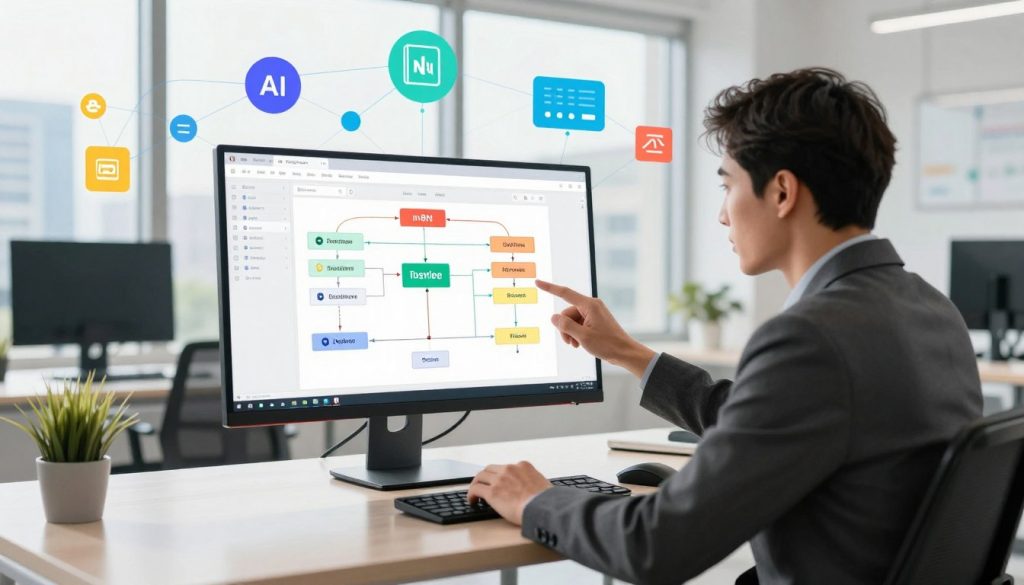
Creating a Basic Workflow to Process New Videos
Start by opening the n8n interface at localhost:5678. The canvas is where you’ll build your logic. A great first workflow automates the processing of new additions to your library.
Here is a simple sequence to construct:
- Trigger: Use the “Watch Files” node. Point it to your Stash library directory via the mounted
/data/sharedfolder. It activates when a new file appears. - Analysis: Connect to a “Code” or “HTTP Request” node that calls your local NSFW Tagger. This sends the file for analysis and returns a list of tags.
- Enhancement: Route the tag data to an Ollama node. This instructs a local language model to generate a creative summary or title.
- Storage: Finally, send the enriched metadata to Qdrant. This saves the information as a vector for future smart searches.
The shared folder mount is crucial. It lets n8n access the actual media files on your drive. Keep the workflow documentation open in another tab window for reference as you build.
If the editor interface seems slow, a quick reload refresh session in your browser can help. This clears any temporary glitches.
Using Ollama LLM to Generate Descriptions or Summaries
The Ollama node brings creative language power directly into your workflows. You select a local model, like Llama 3.2, from your running Ollama instance.
Feed it the raw tags from the analysis step. Then, prompt it to write a short scene description, a catchy title, or even content warnings.
“Using a local LLM means your descriptive text is generated privately. The context of your library never leaves your machine, ensuring unique and secure metadata.”
For example, you could prompt: “Based on these tags [tag1, tag2, tag3], write a two-sentence summary in a playful tone.” The model will generate original text every time. This adds a personal touch that generic scrapers cannot match.
Storing and Querying Data with Qdrant Vector Database
Qdrant is not a typical database. It stores information as mathematical vectors, called embeddings. This enables semantic search across your entire collection.
When you save a video’s metadata to Qdrant, it captures the meaning behind the tags and descriptions. Later, you can search using natural language. Ask for “videos similar to that beach scene from last summer” or “content with a specific mood.”
The system finds matches based on conceptual similarity, not just keyword overlap. This is a game-changer for discovering material in a large library.
| Search Type | Traditional Database | Qdrant Vector Database |
|---|---|---|
| Method | Matches exact keywords or tags. | Finds conceptually similar content using meaning. |
| Query Example | “Tag: outdoor” | “Scenes that feel like a tropical vacation” |
| Flexibility | Rigid; requires knowing specific labels. | Flexible; understands paraphrases and themes. |
To get inspired, explore the n8n AI template gallery. Workflows like “Chat with PDF docs” can be adapted. Imagine a “Chat with your library” agent that answers questions about your collection.
For more advanced ideas, consider an automation agent that curates playlists. It could analyze your viewing history from months ago and suggest sequences based on your current mood.
The n8n project is a vibrant open-source repository. Its high number of GitHub stars reflects strong community trust. Active development means new nodes and features are added regularly.
The power lies in having a private assistant that understands your media. All processing happens locally. You gain incredible convenience without ever sending your personal content to the cloud.
Managing User Accounts and Security Settings
Security is the final, crucial layer that transforms your personal collection from a simple archive into a trusted, private sanctuary. It ensures that your hard work organizing media remains protected. You control exactly who can view your library and what they can do inside it.
This management happens directly within your media manager and your network settings. It turns your system from a solo project into a secure, shareable resource for your household. Let’s lock things down properly.
Setting Up Local User Authentication
Your media manager allows you to create multiple user accounts with different permission levels. This is perfect for sharing access with family or trusted friends securely. You decide who gets administrative power and who can only watch.
Navigate to the “Settings” and then “Users” section in your manager’s web interface. Here, you can add new users by providing a username and a strong password. Assign one of three main roles:
- Admin: Full control over settings, library configuration, and user management.
- Editor: Can edit metadata, tag content, and organize the library but cannot change system settings.
- Viewer: Read-only access for browsing and playing media.
Once created, anyone accessing your library must log in with their credentials. This applies even when connecting from another device on your home network. It’s the first line of defense against casual, unauthorized access.
Configuring Network Security for Local Access
By default, your media manager is accessible to any device on your local Wi-Fi. To tighten this, ensure authentication is always required. This setting is usually enabled when you create the first user account.
For advanced control, configure your computer’s firewall. Restrict incoming connections to the manager’s port (default 9999) and the automation tool’s port (5678). Only allow traffic from specific, trusted IP addresses within your home.
“The strongest security for a self-hosted system is simplicity: keep it on your local network and require a password. Exposing it to the internet should only be done with expert knowledge.”
If you ever need to access your system from outside your home, enabling SSL/TLS encryption is critical. This advanced step encrypts the connection between your device and your home server. Without it, your login details and activity could be intercepted.
The safest practice is to keep your entire system offline from the public internet. Your personal collection doesn’t need to be a public service. This single decision eliminates a vast array of external threats.
| Security Measure | Configuration Action | Benefit |
|---|---|---|
| User Authentication | Create accounts with Admin, Editor, or Viewer roles in the media manager. | Controls what each person can see and change within the library. |
| Local Firewall Rules | Restrict ports 9999 and 5678 to only trusted local IP addresses. | Prevents unauthorized devices on your network from discovering the services. |
| Connection Encryption (SSL/TLS) | Set up a reverse proxy with a certificate (e.g., using Nginx). | Protects data and login credentials if accessing from outside your home network. |
| Network Isolation | Do not forward ports on your router to the system. | Keeps the system completely invisible and inaccessible from the internet. |
Best Practices for Data Privacy
Your data’s privacy is inherent in a local setup—it never leaves your machine. However, you are now solely responsible for its safety and integrity. This means implementing a routine for backups and monitoring.
Regularly back up your media manager’s configuration and database files. These are small but contain all your organizational work. Store backups on a separate drive or cloud service you trust.
Update passwords for your admin and user accounts every few months. Check the access logs within your media manager occasionally for any unusual activity. If you see a login from an unfamiliar device, you can investigate.
Remember the license agreement for the specialized tagging tool. It is for personal, local use only. You may not share access to the models or use them for commercial services.
If you ever need support or encounter a strange message in your web interface, basic steps often help. Try a reload refresh of the page or a new refresh session. Having the official guide open in another tab or a separate tab window is always wise for reference.
By following these steps, you maintain the private, controlled environment you set out to create. Your library remains a personal retreat, guarded by the security measures you put in place.
Customizing Your Experience: Themes and Plugins
Beyond core functionality, the true charm of a self-managed system lies in its ability to adapt to your personal taste. Once your library is up and running, you can transform its look and expand its features. This personal touch makes the software feel uniquely yours.
Community members create visual themes and functional add-ons. These are shared freely for everyone’s benefit. You can change colors, layouts, and even add new tools. This guide shows you how to find and apply these customizations.
Finding and Applying Community Themes for Stash
Many users design custom visual themes for the media manager. These themes alter the color scheme, fonts, and overall layout of the web interface. Browsing for them is a fun way to see what others have created.
You can often find collections on community forums or dedicated websites. Some themes mimic popular streaming services. Others offer dark modes or high-contrast options for easier viewing.
Installing a theme is usually simple. First, download the theme’s CSS file from the creator. Next, place this file into a specific directory within your media manager’s configuration folder.
Finally, open the manager’s web interface. Navigate to the settings menu. Look for an appearance or theme section. Select your newly added theme from the dropdown list and save.
The change takes effect immediately. If you encounter an error loading the new look, a quick reload page action in your browser often helps. Sometimes a please reload message appears, indicating a temporary glitch.
Extending Functionality with Available Plugins
Plugins add new capabilities to your system without changing the core software. Think of them as mini-apps that integrate seamlessly. They can fetch metadata from new sources, export data, or sync with other services.
Useful examples include plugins for generating video thumbnails in a different style. Another might sync your watch status with a separate tracking application. There are even plugins for advanced library statistics.
Finding plugins is straightforward. The official documentation often lists community repositories. You can also discover them through user discussions on forums.
To install a plugin, you typically add its repository URL in the manager’s settings. The system fetches the plugin list and lets you enable them with a click. Always ensure a plugin is compatible with your software version.
“Customization is the bridge between a tool you use and a tool you love. It allows your digital space to evolve with your personal workflow.”
Encourage yourself to experiment. Try a new theme every few months. Test a plugin that solves a specific organizational challenge. Making the system enjoyable ensures you’ll use it daily.
Remember, themes and plugins are community-supported. Their creators are volunteers. Compatibility with new manager versions may vary after major updates released years ago.
If a plugin stops working, check its source page for updates. Joining the official Discord server or user forum is highly recommended. You can share your customizations, request new ones, and get help from experienced users.
For a clear overview, here is how themes and plugins differ in their primary roles:
| Aspect | Themes | Plugins |
|---|---|---|
| Primary Purpose | Change visual appearance and user interface aesthetics. | Add new features, integrations, and backend functionality. |
| Installation Method | Copy CSS files to a config folder; select in Settings. | Add repository URL in Settings; enable from fetched list. |
| Customization Level | Cosmetic (colors, layout, fonts). | Functional (new scrapers, exporters, tools). |
| Update Frequency | Low; often stable for long periods. | Higher; may need updates for compatibility. |
| Common Source | Forum threads, dedicated styling websites. | Official documentation, community code repositories. |
Taking a few moments to personalize your setup pays off. It makes managing your collection a more pleasant and efficient experience. Your private library should work and look exactly how you want it to.
Troubleshooting Common Installation and Runtime Errors
When your private media system throws an error message, a methodical approach will get you back on track quickly. Even with careful setup, technical glitches can occur due to hardware variability or software conflicts. This guide walks you through resolving the most frequent issues.
Remember, encountering a problem is not a failure. It’s a chance to deepen your understanding of your self-hosted environment. The communities around these tools are generally helpful and have seen most issues before.
“Error Loading” and “Please Reload Page” Messages
These browser-based messages are common in web interfaces like your media manager or n8n. They often indicate a temporary communication hiccup between your browser and the local service.
The first fix is always a simple reload refresh of the page. If that doesn’t work, try a hard refresh (Ctrl+F5 or Cmd+Shift+R). This clears the local cache and fetches fresh data.
If the error persists, check if the underlying service is actually running. Open a terminal and verify the Docker containers or application process. A service might have crashed silently.
Sometimes, you may have signed another account in a different tab window. This can cause session conflicts. Try closing all another tab instances and logging in again from a single window.
For persistent “please reload page” messages, clear your browser’s cookies and site data for localhost. This often resolves stubborn authentication or session problems.
Solving GPU Support and Docker Issues
Docker-related problems are a frequent hurdle. Permission errors often occur on Linux systems. Ensure your user is part of the ‘docker’ group. You may need to log out and back in for this change to take effect.
Port conflicts can prevent containers from starting. Verify that ports 5678 (n8n) and 9999 (your media manager) are not already in use by another application. You can change these ports in the configuration files if needed.
GPU support issues are particularly common. The creator of the tagging tool notes that running machine learning models is complex. Hardware and software variability can cause failures.
“The creator will help but can’t guarantee every system. Patience and methodical testing are your best allies when self-hosting.”
For NVIDIA users, ensure the NVIDIA Docker runtime is installed. Check your driver version is up-to-date. An outdated driver is a top cause of GPU-related error messages.
If GPU acceleration fails, the simplest fallback is to use the CPU profile. Performance will be slower, but functionality remains. This is a reliable way to get your system running while you diagnose the GPU problem.
For macOS and AMD GPU users, remember support is in Beta. You might encounter more quirks. Consulting the project’s specific documentation for your hardware is crucial.
Where to Find Help: Discord, Forums, and Documentation
Your first line of defense should always be the official documentation. Each project’s docs contain dedicated troubleshooting sections. They address common scenarios and required commands.
If the docs don’t solve your issue, turn to the community. Vibrant forums and Discord servers exist for the media manager, n8n, and the tagging tool. Others have likely solved similar problems.
Before posting your questions, search the forum or Discord history for your error message. You will often find a solution quickly. If you need to report a bug, provide detailed system information.
This includes your OS version, Docker version, GPU model, and the exact error log. This saves everyone time and leads to faster help.
| Resource Type | Where to Find It | Best For |
|---|---|---|
| Official Documentation | Linked on each project’s main code repository page. | Step-by-step guides, configuration references, and initial troubleshooting. |
| Community Forums | Often linked from the project’s website or GitHub README. | Searching for past solutions and asking detailed configuration questions. |
| Discord Server | Invite links are commonly found in forum signatures or project docs. | Real-time help, quick clarifications, and community chat. |
| n8n Support Forum | Separate forum dedicated to the workflow automation tool. | Issues specific to building workflows, node errors, and integration problems. |
Remember, the specialized tagger has limited support for non-NVIDIA hardware. Performance on CPU will be slow but functional. This is a known limitation, not a bug.
If you get stuck, take a break. Come back after some time with a fresh perspective. Self-hosting sometimes requires tinkering, but the reward of a fully private system is worth it.
Keep a reload refresh session in mind as a basic tool. And remember, you might have signed another service account that’s interfering. Isolating the issue is half the battle.
Maintaining and Updating Your Self-Hosted System
Maintenance is the quiet engine that ensures your private library remains fast, secure, and organized over time. A little regular care prevents big headaches later. It transforms your setup from a temporary project into a lasting, reliable media hub.
Think of this routine like servicing a car. You check the oil, rotate the tires, and ensure everything runs smoothly. For your digital system, this means updating software, backing up critical data, and watching resource usage.
Following a simple schedule protects all your hard work. Your curated collection and custom settings deserve this protection. Let’s walk through the three pillars of effective upkeep.
Updating Docker Images Safely
Your automation toolkit receives improvements and security patches. Applying these updates keeps your system healthy. The process is designed for minimal downtime.
First, navigate to your AI Starter Kit directory in a terminal. Use the pull command to fetch the latest images for your hardware profile.
For an NVIDIA GPU system, the command is:
docker compose --profile gpu-nvidia pullFor a CPU-only setup, use --profile cpu instead. This downloads the new software packages. Your existing information and workflows remain safe.
Next, recreate and restart the containers with this sequence:
docker compose create && docker compose --profile gpu-nvidia up“Always pull new images before restarting. This ensures a clean update and avoids version mismatch errors that can break services.”
The system will briefly pause and then come back online. Your workflows and database connections should resume automatically. Check the n8n interface at localhost:5678 to confirm.
Subscribe to release notifications on the project’s code platform. This sends you an email when a new version is available. You’ll know about important fixes months before you might stumble upon an issue.
Backing Up Your Stash Configuration and Database
Your media manager’s brain is not your video files. It’s the configuration and database that hold all your tags, metadata, and settings. Losing this would mean reorganizing everything from scratch.
Protecting it is straightforward. You need to back up two critical items regularly.
- The config.yml file: This holds your library paths, scraper settings, and user accounts.
- The SQLite database file: This contains all scene metadata, performer details, tags, and playlists.
Find these items in your Stash application data directory. The exact location depends on your operating system. The official documentation provides the paths.
Copy both items to a backup location. A good schedule is weekly, or right after you make major changes to your library. Store copies on an external drive or in encrypted cloud storage.
| Item to Back Up | What It Contains | Restore Process |
|---|---|---|
| config.yml | All system settings, library paths, and user authentication details. | Stop Stash, replace the file, and restart the application. |
| stash-go.sqlite (Database) | Every tag, performer record, scene metadata, and organizational link. | Stop Stash, replace the file, and restart. The manager will recognize the restored data. |
If your system crashes, these backup files are your lifeline. You can restore your entire organized library in minutes. Without them, you’d be starting over with a blank catalog.
Monitoring System Resources Over Time
Your services run quietly in the background. It’s wise to check their health occasionally. This prevents surprises like a full hard drive or a memory leak.
Use simple built-in tools to watch resource activity. For Docker containers, open a terminal and run:
docker statsThis shows live CPU, memory, and network usage for each container. Your system’s task manager (Activity Monitor, Task Manager) gives a broader view of overall machine load.
Pay attention to disk space. Logs and temporary files can accumulate over years. A tool released months ago might have verbose logging turned on by default.
Periodically clean this data. Docker provides options to remove old, stopped containers and unused images. You can also configure log rotation within your media manager’s settings.
“A full disk is the most common cause of a sudden system halt. Schedule a monthly check of your storage space to avoid this simple problem.”
Set aside time every few months for this checkup. Review your update notifications, run a backup, and glance at resource usage. This small investment guarantees your private entertainment hub will serve you well for years.
A well-maintained system runs smoothly and predictably. It respects the effort you put into building it. You gain peace of mind, knowing your personal media sanctuary is secure and ready whenever you are.
Exploring Advanced Use Cases and Ideas
Your self-hosted toolkit is a canvas. Let’s paint with ideas that make your media collection uniquely intelligent. Moving beyond basic organization opens a world of personalization.
You can build systems that understand your tastes and automate creative tasks. This turns your library from a static archive into a dynamic partner. The possibilities are limited only by your imagination.
Creating a Personal Content Recommendation Engine
Why rely on generic algorithms when you can build your own? Your Qdrant vector database holds the key. It stores the semantic meaning of your tags and descriptions.
You can craft a workflow that analyzes your viewing history. It looks for patterns in the tags you interact with most. The system then suggests unseen material with similar thematic qualities.
This is a private, tailored discovery tool. It learns exclusively from your activity. You avoid the echo chamber of public platforms.
To set this up, you might keep the n8n guide open in another tab window. If the interface stalls, a quick reload refresh session gets you back on track. The effort pays off with a curator that knows you better over months.
Using AI Agents for Automated Library Curation
The n8n template gallery is a treasure trove. Look for workflows like “AI Agent Chat” or “Recipe Recommendations”. These can be adapted for media management.
Imagine an agent that acts as your assistant. When new files are added, it automatically tags and rates them. It could even create themed playlists for holidays or seasons.
You can integrate other local tools, like image generators. They could design custom thumbnails or artwork for your collections. This adds a visual flair that standard scrapers miss.
“An automation agent turns maintenance into magic. It handles the grunt work so you can focus on enjoying your curated content.”
This level of automation was a dream months ago. Now, it’s within reach thanks to active development. The project enjoys many contributors and a high number of GitHub stars.
Analyzing Video Content with Custom Scripts
For those with coding skills, the Stash API is a powerful gateway. You can write Python scripts to extract deep insights from your library.
Generate statistics on your most-watched genres or performer pairings. Visualize your viewing habits over time. This data helps you understand your own preferences.
The local Ollama language model can serve as a creative partner. Feed it scene details and ask it to write short descriptions or even fanfiction. This turns your library into a source of inspiration.
Connect your media system to home automation. Use a voice command with a local assistant to play a specific video on your TV. Your entire entertainment environment becomes responsive.
| Advanced Idea | Tools Required | Outcome |
|---|---|---|
| Personal Recommendation Engine | Qdrant, Viewing History Data | Discovers unseen material tailored to your unique tastes. |
| Automated Curation Agent | n8n AI Agent, Tagging Models | Handles tagging, rating, and playlist creation automatically. |
| Deep Library Analytics | Python, Stash API | Provides insights into viewing habits and genre preferences. |
| Creative Content Generation | Ollama LLM | Produces unique descriptions or stories based on your collection. |
| Home Automation Integration | Voice Assistant, Local Network | Enables hands-free control and playback on connected devices. |
The open-source nature of these tools is their superpower. You can modify the source code to fit your exact needs. Fork the repository and build a feature you’ve always wanted.
If you create something innovative, share it with the community. Your ideas can inspire others and contribute back to the project. This collaborative spirit is what drives the ecosystem forward.
Remember, this is your private digital space. You have the freedom to experiment without limits. Turn your media library into a reflection of your creativity.
Conclusion: Taking Full Control of Your Digital Media Library
The final step isn’t about software—it’s about reclaiming your digital autonomy. You’ve journeyed from downloading open-source blueprints to running a fully private, intelligent library on your own machine. This system puts you in the director’s seat for your personal collection.
You now enjoy complete privacy, total control, and lasting cost savings. Your setup is future-proof, immune to external platform changes that happened years ago or may come in future months. New features and models are released regularly, inviting continuous learning.
Remember to respect the licenses, especially for personal use. You have the knowledge and tools to manage your digital media life. Your next action could be deeper automation, contributing to the projects, or helping others.
Most importantly, have fun curating your content and exploring the possibilities of local intelligence. Your video library is now a personal sanctuary, designed by you, for your enjoyment, on your own time.