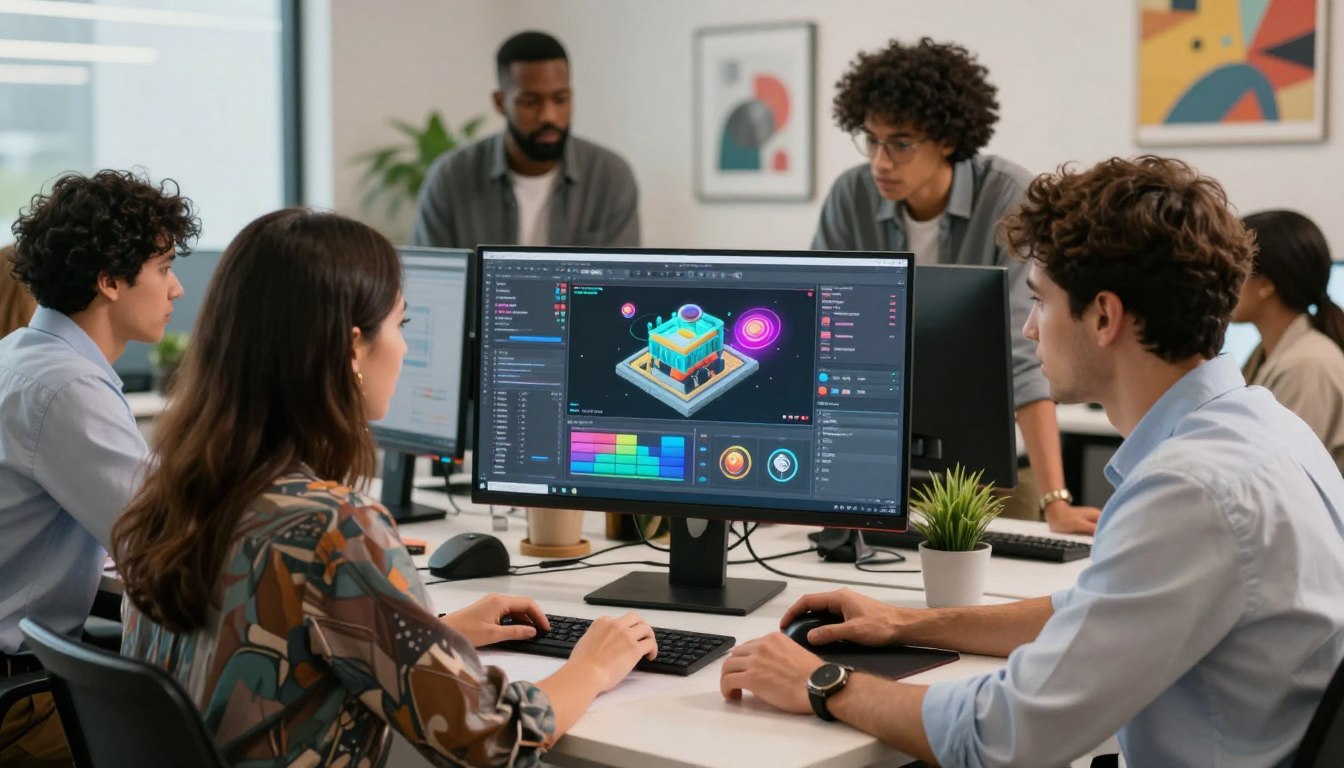
What if the next great digital artist isn’t a person, but a machine you guide? The world of adult content is undergoing a radical transformation.
Artificial intelligence now allows anyone to generate custom visual media. This guide explores this innovative form of digital creation.
The technology has evolved rapidly. Public tools like Stable Diffusion, released in 2022, have democratized this process. Powerful platforms are now accessible to curious people.
This field holds potential for unique expression. Yet, it comes with serious responsibilities. Ethical and legal considerations around consent are paramount.
Our friendly tutorial will walk you through the basics. We focus on educational purposes only. Creativity must always be balanced with a strong moral compass.
We’ll start with understanding the core concepts. Then, we’ll move to a step-by-step process. Finally, we’ll navigate the crucial ethical and legal steps every creator must know.
Key Takeaways
- AI has opened new doors for creating custom adult media and videos.
- Tools for this type of content creation became widely available to users around 2022.
- Exploring this technology requires a firm understanding of its ethical implications.
- Legal consent is the non-negotiable foundation of any responsible project.
- This guide is designed for educational insight into the creative process.
- A step-by-step approach makes complex technology accessible.
- Balancing innovation with responsibility is the key to safe exploration.
What Is AI-Generated Pornography?
Unlike traditional adult films, this content originates not from a camera, but from a computer program. AI-generated pornography is synthetic media created entirely by algorithms.
These systems, like GANs and text-to-image models, produce lifelike visuals from written descriptions. No real actors are involved in the initial creation.
Generative AI Porn vs. Deepfake Porn: Knowing the Difference
A crucial distinction exists between these two kinds of synthetic material. Generative AI porn is built from scratch using text prompts.
It crafts original characters and scenarios. Deepfake pornography, however, alters existing footage of real people.
This manipulation typically occurs without the person‘s consent. A 2023 analysis revealed a stark reality.
It found that 98% of deepfake videos online are pornographic. An alarming 99% of victims are women.
This highlights the non-consensual nature of much deepfake content. Understanding this divide is fundamental for responsible exploration.
The Current Landscape: From Custom Avatars to Ethical Debates
The digital adult scene now includes customizable AI avatars and virtual influencers. These synthetic beings interact with users on platforms like OnlyFans and Instagram.
They blur the line between human and machine-generated media. This landscape raises complex ethical questions.
Debates simmer about authenticity and consent, even for entirely fictional characters. Is it ethical to generate sexual images of a synthetic model?
The conversation is ongoing and important. The technology itself relies on text inputs and vast training datasets.
Users write descriptive phrases to guide the AI‘s output. The quality of the final image or video depends heavily on these prompts.
The release of open-source models, like Stable Diffusion in 2022, was a pivotal moment. It accelerated public access to powerful generative art tools.
This opened doors for both artistic and explicit content creation. Grasping these core concepts is your essential first step.
It prepares you for the practical decisions ahead in choosing tools and starting any project.
Gearing Up: Tools and Platforms for AI Adult Content
A new ecosystem of platforms now puts powerful generative tools directly into users’ hands. This landscape offers a practical toolkit for anyone curious about digital creation. Your choices range from general-purpose art programs to highly specialized websites.
Understanding your options is the first step toward responsible exploration. Let’s examine the main categories of software and services available.
Text-to-Image and Video Generators
Many popular tools are built on foundational models like Stable Diffusion. This open-source technology was a game-changer upon its release. It allows users to create visuals from written descriptions.
You type a text prompt, and the program generates an image. Advanced platforms extend this to short video clips and GIFs. Customization is a key feature.
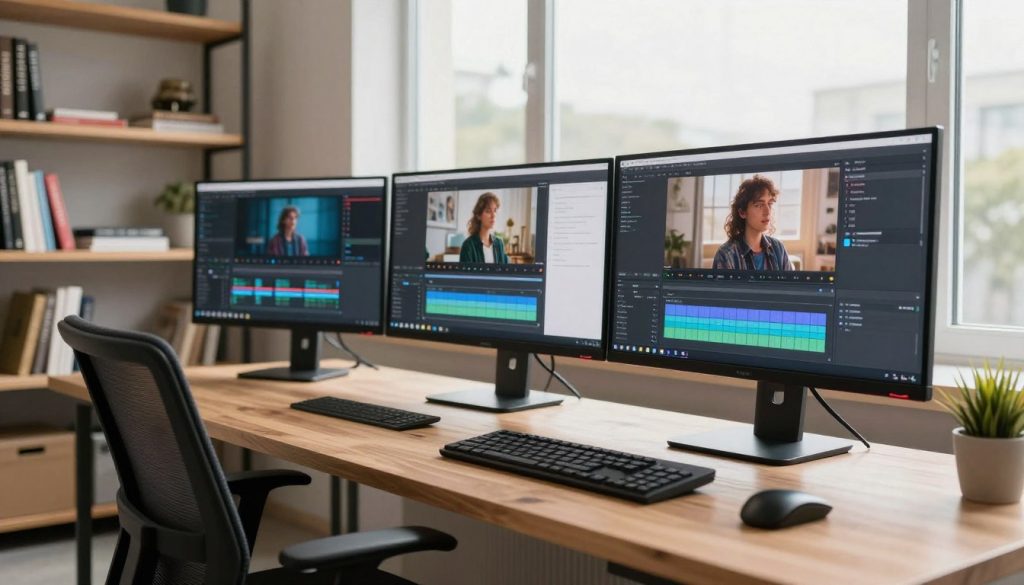
These systems let you adjust body types, clothing, and scenarios. Some even offer “nudifier” features or face-morphing capabilities. It’s crucial to remember the ethical line these features can cross.
The quality of output depends heavily on your skill with prompts. Prompt enhancers and iterative editing tools help refine results. Mastery takes time, but the learning curve is manageable.
Specialized AI Porn Websites and Their Features
Dedicated sites for this material emerged prominently around 2023. They are designed specifically for generating adult content. These platforms often provide a more streamlined experience.
Common features include custom character creators and categorized galleries. Users can browse continuous feeds of images made by others. This creates a community aspect around the creation process.
Some specialized sites offer interactive elements, like AI companions or “erobots.” The goal is to provide a one-stop shop for synthetic pornography. Everything is built for this single purpose.
These websites typically operate on a freemium or subscription model. They abstract away the complex technology behind simple buttons and sliders. For many users, this is the easiest point of entry.
Important Considerations Before You Start
Before diving in, several practical factors deserve your attention. Cost is a primary one. Many tools are free with limitations, while others require a monthly fee.
Evaluate the learning curve involved in prompt engineering. Better prompts yield better images and videos. Be prepared for a period of trial and error.
Research the reputation and privacy policies of any platform you use. This industry is largely unregulated. Your data and privacy may be at risk.
Always choose tools that align with your creative goals and comfort level. More importantly, they must respect firm ethical boundaries. Your moral compass should guide every technical choice you make.
This preparation ensures a safer, more informed creative journey. With the right tool in hand, you can focus on expression within a responsible framework.
How to Make AI Porn Videos: A Step-by-Step Process
The journey from a simple idea to a finished piece of synthetic media is a structured craft. This tutorial breaks the creative process into four manageable steps. Each phase builds upon the last, blending technical skill with artistic vision.
You will learn to conceptualize scenes, communicate with the technology, and refine raw outputs. The goal is to produce polished images and sequences for personal use. Remember, this guide is for educational insight into digital creation.
Step 1: Ideation and Concept Development
Every great piece of content starts with a strong concept. Begin by brainstorming a scene, characters, and a brief narrative. Ask yourself about the setting, mood, and actions you wish to depict.
Strong ideas lead to better results, even in algorithmic generation. Define your characters’ appearances and relationships. Is it a romantic encounter or a fantasy scenario?
Clarity here saves time later. Jot down notes or sketch rough outlines. This foundation guides your entire project.
Step 2: Crafting Effective Prompts and Parameters
This step is the art of prompt engineering. Your text description directs the AI’s output. Effective prompts use detailed descriptions of scenes, characters, and styles.
Be specific and avoid ambiguity. Instead of “a person,” write “a brunette model with curly hair, wearing a red dress.” Include parameters for composition, lighting, and action.
“The difference between a good and great output often lies in the prompt’s specificity. Use adjectives, define camera angles, and reference artistic styles.”
Many platforms offer prompt enhancers or suggestion tools. These can help improve your descriptions. The table below outlines key components for powerful prompts.
| Prompt Component | Example | Purpose |
|---|---|---|
| Subject | “Two athletic models in a bedroom” | Defines primary characters and setting |
| Action & Pose | “embracing, mid-action, dynamic” | Guides movement and energy in the scene |
| Visual Style | “cinematic lighting, photorealistic, 8K” | Sets aesthetic quality and resolution |
| Explicit Details | “partial nudity, sensual expression” | Specifies the nature of the adult content |
| Negative Prompt | “avoid blurry faces, no distorted hands” | Removes unwanted elements from the image |
Step 3: Generation, Iteration, and Refinement
Now, input your prompt into your chosen software. The generation phase begins. You will enter an iterative cycle of creating, reviewing, and tweaking.
AI models can produce unexpected results. A generated image might have odd proportions or mismatched details. This step requires patience and experimentation.
Use the platform’s tools to edit generated images or modify others’ work. Some sites allow users to build upon shared material. This collaborative process can spark new ideas.
Refine your prompts based on initial outputs. Change a word, adjust a parameter, and generate again. After a week of practice, your skills will improve noticeably.
Step 4: Basic Editing and Finalization
Raw generated images or short clips need post-processing. Use basic video or image editing software to compile sequences. Adjust colors, crop frames, and add simple transitions.
This finalization turns separate images into a cohesive video. You might add text or a soundtrack. The goal is a polished piece of media ready for personal viewing.
Remember, this creation is for your own educational exploration. The process itself—ideation, prompting, iterating, editing—is a rewarding craft. It blends human creativity with machine capability.
With these steps, users create custom explicit content responsibly. Always prioritize ethical guidelines as you explore this digital art form.
Navigating the Ethical Minefield
The freedom offered by AI tools is matched by serious ethical dilemmas that demand careful navigation. Mastering the technology is only half the journey. The other half involves a firm commitment to moral responsibility.

Every choice a creator makes has implications. This section explores the critical issues of consent, illegal material, and societal impact. Our friendly guide now takes a serious turn to ensure your creativity remains responsible.
The Paramount Issue of Consent: Avoiding “Undress” Apps and Deepfakes
Consent is the non-negotiable foundation of all ethical content creation. Generating sexual images of real people without their permission is a profound violation. This includes using “undress” applications or creating deepfakes.
These tools superimpose a real person‘s face onto explicit scenarios. A real-world scandal involved a company like Grok. Reports indicated its tools generated one nonconsensual image per minute during a viral trend.
This kind of media is a digital form of revenge porn. It causes real psychological harm to victims. The law is increasingly treating such acts as serious offenses.
Always ensure any human-like figure in your work is entirely fictional. Do not use the likeness of celebrities, acquaintances, or anyone without explicit, documented consent. This rule protects others and shields you from legal repercussions.
The Scourge of Child Sexual Abuse Material (CSAM)
This is the most grave ethical and legal boundary. Using AI to generate child sexual abuse content is a horrific crime. It does not matter that the images are synthetic.
Organizations like the Internet Watch Foundation have raised major alarms. They warn that AI is creating new, realistic material that fuels this abuse. Such acts are illegal in every U.S. state and most countries worldwide.
Possessing or sharing this pornography carries severe penalties, including long prison sentences. There is no creative, educational, or artistic justification for this kind of generation. Your moral compass must absolutely reject it.
Bias, Objectification, and Societal Impact
AI models learn from vast datasets scraped from the internet. These datasets often contain societal biases and harmful stereotypes. The technology can then amplify these issues in its outputs.
You might notice generated adult content disproportionately objectifies certain body types or ethnicities. It can reinforce narrow views on gender and sex. As a creator, you have the power to challenge or perpetuate these patterns.
“The algorithm doesn’t have ethics; it reflects the data it’s fed. It’s our human responsibility to guide its output toward more conscious and equitable representations.”
The societal impact of pornography is widely debated. Critics argue it can be exploitative and shape unhealthy expectations. Proponents view it as empowering labor and a form of sexual expression.
Where do you stand? Actively reflect on the themes you generate. Are you creating diverse, consensual scenarios? Or are you copying harmful tropes? A conscious approach makes your creative journey more meaningful.
To help visualize these critical distinctions, the table below outlines common ethical pitfalls versus responsible practices.
| Ethical Pitfall | Responsible Practice | Key Reason |
|---|---|---|
| Creating non-consensual deepfakes | Using entirely original, fictional characters | Prevents harm and avoids revenge porn laws |
| Generating any CSAM material | Zero tolerance; immediate reporting of such tools | It is a severe crime and causes immense harm to children |
| Uncritically amplifying biases | Using diverse prompts and editing for fair representation | Counters objectification and promotes healthier media |
| Ignoring platform terms of service | Reading and adhering to all company rules | Prevents account bans and supports a safer ecosystem for all users |
| Sharing content without context | Keeping personal creations private or in secured spaces | Reduces risk of misuse and respects the sensitive nature of the material |
Navigating this minefield requires constant vigilance. Take time each day or week to reflect on your projects. Ask yourself if your work respects the dignity of all people.
Technical skill must always be paired with a strong ethical framework. This balance is what separates thoughtful digital art from harmful pornography. Let your creativity be a force for positive, respectful exploration.
Understanding the Legal Landscape
Navigating the world of synthetic media requires a map not just of tools, but of the legal jurisdictions you operate within.
Ignorance of these laws is not a defense. This landscape is complex and changes fast.
Creators must understand rules from three sources: national governments, international bodies, and the platforms themselves.
Laws in the United States: A State-by-State Patchwork
In the U.S., there is no single federal law against non-consensual AI pornography. Regulation is a patchwork of state laws.
Some states have acted decisively. California, Virginia, and Texas have specific legislation.
These statutes criminalize the creation and distribution of non-consensual deepfakes. Victims can sue for damages.
This creates a legal gray area. An act might be legal in one state but a crime in another.
Creators must check their local statutes. The table below outlines key state approaches.
| State | Key Legislation | Primary Focus |
|---|---|---|
| California | AB 602 (2023) | Allows civil lawsuits for distribution of digitally forged intimate material. |
| Virginia | § 18.2-386.2 | Makes non-consensual deepfake pornography a Class 1 misdemeanor. |
| Texas | HB 2700 (2023) | Criminalizes the creation of deceptive sexual content with intent to harm. |
“The state-by-state approach in the U.S. creates a compliance nightmare for anyone operating online. A creator in a lenient state can still be sued by a victim in a strict one.”
The lack of a unified federal law means vigilance is essential. You are responsible for knowing the rules where you and your users are.
International Perspectives: Stricter Regulations Abroad
Many countries have moved faster than the U.S. Their regulations are often stricter.
South Korea presents a critical case. It accounts for roughly 53% of global deepfake porn production.
In response, its government enacted harsh new penalties. Simply possessing or viewing non-consensual deepfakes can now lead to prison time.
Crimes involving minors carry even harsher sentences. This shows a global trend toward criminalizing not just creation, but consumption.
England and Wales passed the Data (Use and Access) Act in 2025. This law directly targets “undress” apps and nudifying software.
It aims to shut down the tools used to generate this abusive content. The message is clear: the platform or company providing the tool can be held liable.
These international moves signal that lawmakers are catching up. What was an unregulated space is quickly becoming a monitored one.
Platform Terms of Service and Their Enforcement
Beyond government law, every platform has its own rules. The Terms of Service (ToS) for sites like X or dedicated AI sites are a binding contract.
They universally prohibit abusive content, hate speech, and non-consensual intimate material. Violating these terms has consequences.
Your account can be banned without warning. Your content can be deleted. In severe cases, the company may report you to authorities.
However, enforcement is often inconsistent. Automated systems miss context. Human moderators are overwhelmed.
This inconsistency is not a loophole. It is a risk. Your project could be removed after you have invested significant time.
Always read the ToS of any tool or service you use. Understand what material is forbidden. This protects your work and respects the community.
The legal landscape for digital creation is evolving rapidly. New laws are proposed every month.
Stay informed about developments in your jurisdiction. What is legal today might be regulated tomorrow.
This knowledge is not a barrier to creativity. It is the foundation for sustainable and responsible creation. Protect yourself and the people your work might impact.
Conclusion
This guide has mapped the technical, ethical, and legal terrain of a new form of digital expression. The process for generating content is now accessible, moving from text prompts to final videos.
Your creative power carries significant responsibility. The ethical and legal sections are not footnotes—they are your essential framework for safe creation.
This technology holds a dual nature. It allows for innovative, personalized media, yet it fuels harmful deepfakes and non-consensual sexual images. Always prioritize consent and legality.
Channel your curiosity into positive exploration. The tools and laws will keep evolving every day. Be an informed, conscientious participant in this landscape.
Your journey in digital art should respect the dignity of all people. Let that principle guide your work.